Can Phlebitis Get Better Then Worse Again With Overuse
Athletes and Claret Clots
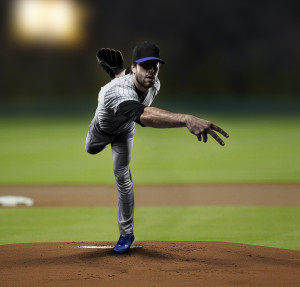 Healthcare providers may delay or miss blood clot diagnoses, including deep vein thrombosis (DVT) and pulmonary embolism (PE), among athletes who exhibit classic symptoms.
Why?
Considering healthcare providers often do not consider blood clots something that affects athletes. Claret clots are uncommon in young, healthy individuals – and most athletes are young and healthy. So, for that reason, DVT, PE, and arterial clots in athletes are non the norm.
To understand how this problem affects athletes and the health professionals who treat athletes, y'all must first understand claret clot terminology. Your body is composed of an countless tunnel of arteries and veins through which blood flows throughout the body. Arteries are the blood vessels that carry the blood from the heart into the outside of the torso: the brain, the internal organs, the legs, and the arms. Clots in an arteries lead to stroke, heart attack, or limb-threatening peripheral arterial clots, causing a painful, cold, and pale arm or leg.
Many people think of blood clots as a trouble that occurs in elderly people and not in immature and apparently healthy individuals. Symptoms may, therefore, exist misinterpreted every bit something less serious. Especially in athletes, healthcare providers often interpret the leg symptoms from DVTs equally "musculus tear," a "Charlie horse," a "twisted talocrural joint," or shin splints. Breast symptoms from PE are ofttimes attributed to a pulled muscle, costochondritis (inflammation of the joint between ribs and chest bone), bronchitis, asthma, or a "touch of pneumonia."
Veins deport blood back to the heart from the remainder of your torso. Clots in the deep veins of the legs, arms, pelvis, abdomen, or around the brain are chosen deep vein thrombosis (DVT). If a piece of the clot breaks off from a leg or arm and travels to the lung, information technology can crusade a clot in the lung. A clot in the lung is chosen a Pulmonary Embolism or PE. A PE can be a life threatening medical emergency. You demand to seek immediate medical attention if you lot have symptoms of a PE.
Athlete-Specific Risk Factors for Clots
Being apparently healthy and being an athlete does non prevent a person from developing blood clots. Several circumstances put the athlete, as well equally the non-athlete, at increased risk for DVT and PE. Athletes, coaches, and trainers should be especially aware of these risk factors.
- Traveling long distances to and from a sports competition (past plane, motorcoach, or automobile)

- Aridity (during and after a strenuous sporting consequence)
- Significant trauma
- Immobilization (brace or bandage)
- Bone fracture or major surgery
- Nascence command pills and patch, pregnancy, hormone replacement therapy
- Family history of DVT or PE
- Presence of an inherited or acquired clotting disorder (Factor V Leiden, prothrombin 20210 mutation, antiphospholipid antibodies, and others)
- Presence of a built abnormality of the anatomy of the veins
- May-Thurner Syndrome (narrowing of the major left pelvic vein)
- Narrowing or absence of the inferior vena cava (the main vein in the belly)
- Cervical rib causing thoracic outlet obstruction
 Fourth dimension Out: Contempo Studies Show Important Trends
Two studies have evaluated the adventure for blood clots associated with marathon or endurance athletes. These studies, conducted past Claire Hull, PhD, and her colleagues in the United Kingdom, appear beneath.
Hull and Harris (2013)_Circulation (ii)
Hull et al. (2014)_Scand J SMS
Go on Offense: Know the Risk Factors for DVT and PE in Athletes
The nearly common clots occurring in athletes are DVTs of the leg and PE. In addition to the potential run a risk factors for athletes and non-athletes outlined above, at that place be a few unique take chances factors that predispose younger people and athletes to DVT and PE:
- Thoracic Outlet Obstacle or Effort Thrombosis. In some individuals an extra (cervical) rib or excess muscle or tendon tissue compresses the big vein in the upper chest (subclavian vein) that drains the blood from your arm. This pinch typically gets worse when yous elevator your arm up. This obstruction, often combined with repeated trauma to your vein (from throwing activities, weight-lifting, or gymnastics maneuvers), may crusade a DVT to form in this area, extending into your arm veins. This is called "attempt thrombosis" or "thoracic outlet obstruction/syndrome." If the DVT resolves, for example, after clot buster treatment, you may need a resection of the extra rib or the excess tissue to increase space in the thoracic outlet.
- May-Thurner Syndrome. This is a mutual congenital anatomic or mechanical variation that predisposes you to DVTs in the left leg. DVTs form with May-Thurner Syndrome when the main left pelvic vein is compressed by the overlying main right pelvic artery. This increases the risk of clot formation at the site of this narrowing in the left pelvis (hip area) with extension of the jell going down into the left leg. If the DVT resolves, for case, after jell buster (thrombolytic) treatment, the narrowing tin can be opened upwards by a radiologist with a balloon angioplasty and then kept open by placing a stent (or tube) to proceed the site open up.
- Congenital Absence or Malformation of the Vena Cava. Congenital abnormalities of the anatomy of the big vein in the abdomen (vena cava) or pelvic veins can be a cause of DVT in young people. The aberrant beefcake probably leads to disturbed blood flow and an increased risk of clotting.
Get Your Head in the Game: Recognize Blood Clot Symptoms
 Information technology's important to remain vigilant virtually the signs and symptoms of claret clots. These include:
Deep Vein Thrombosis – DVT
- Swelling, usually in your leg (can likewise occur in your arm especially in weight-lifters, gymnasts, rowers, etc.)
- Leg (or arm) pain or tenderness, usually described as a balk or Charley equus caballus
- Cherry-red or blueish peel discoloration
- Leg warm to touch
Pulmonary Embolism – PE
- Sudden shortness of breath
- Breast hurting-sharp, stabbing; may get worse with deep breath
- Rapid heart rate
- Fainting or passing out
- Unexplained cough, sometimes with bloody mucus
Treatment Considerations
Handling decisions for people who accept claret clots must be individualized. This is particularly true for young, apparently healthy individuals, such every bit athletes. In the instance of unexplained DVT, testing for an inherited or acquired clotting disorder may be appropriate. Read more than nearly blood clot treatment options here.
Defence force Wins Games: How to Preclude Blood Clots
- Take breaks and stretch legs when traveling long distances
- Stay well hydrated (during and later on a strenuous sporting event and travel)
- Know the symptoms of DVT and PE and seek early on medical attending if they occur
- Realize that DVT and PE can occur in the athlete
- Know the risk factors for blood clots
- Know whether you have a family unit history of blood clots
- In case of major surgery, trauma, prolonged immobility, or when in a cast: enquire your doc whether you should receive DVT prophylaxis and, if yes, for how long
The Clotting Procedure
 Your torso is designed with a natural balance between factors in your blood that cause your claret to clot and other factors that cause your blood to dissolve clots.
Blood clots tin occur when:
- You have an imbalance between the 2 systems that keep the clotting procedure in your blood in check; either (A) too much activity of the proteins and blood platelets that grade clots (the procoagulant arrangement), or (B) too little activity of the system that dissolves blood clots as they form (the fibrinolytic system)
- Y'all take trauma to a blood vessel wall, similar you might have after a bone fracture or in thoracic outlet obstruction as defined in a higher place
- Your claret return from your arms and legs to your heart is impaired or not operation properly, like when you sit down with your legs bent in a cramped positions for a prolonged catamenia of time
- Your blood is "thicker" than usual, which occurs when athletes are dehydrated, using the drug erythropoietin (EPO), or receiving excessive blood transfusions (claret doping)
Unfortunately, few studies exist that investigate the influence of physical grooming on blood jell formation and dissolution. And so, nosotros don't know the exact net effect of training on this clotting balance machinery. Nosotros practice know, for example, that blood levels of the clotting protein Factor Viii increase with exercise and that the elevation persists during recovery. Theoretically, this could lead to an increased gamble of blood clots in athletes. Even so, data also signal that the fibrinolytic organization that dissolves blood clots is overactive in people who do. With this over action, athletes would be protected from having a blood clot. Yet, we practise not know the internet effect of these changes in athletes.
(Y'all tin can detect a detailed scientific word of the coagulation issues relevant to practice and grooming in a published review listed as reference 1 below. Nonetheless, the conclusions are thin and vague, because of a lack of data and conflicting results from different studies.)
Psychosocial Implications
Athletes need to capeesh that significant deconditioning tin occur afterwards a DVT or PE. Depression can also gear up in after such a life-changing event. This is non surprising, given that athletes often view themselves as healthy and, from a health point of view, invincible, and now suddenly realize that they are vulnerable, sick, and sometimes even disabled. Patient support groups may exist helpful in this situation, as may antidepressants.
Selected References for the above article:
- El-Sayed MS et al: Exercise and training furnishings on blood haemostasis in health and illness: an update. Sports Med 2004;34(3):181-200.
- Shrier I, Kahn SR: Effect of physical action subsequently recent deep venous thrombosis: a accomplice study. Medicine and Science in Sports and Exercise 2005;37: 630-634.
- Roberts WO, Christie DM: Return to training and competition after deep venous calf thrombosis. Medicine and Science in Sports and Exercise 1992;24:2
Additional Resource for Athletes
- NBCA Sports and Health Constitute – Information technology is our goal to provide athletes of all levels with a potent back up system to help them bounciness back and ultimately thrive following a claret clotting issue. We are here to aid. You have what it takes to join the team, and you can skip the endeavour-outs! This is a team where everyone gets to play, no matter what their feel level may be. Bring together us today.
- Clot Buster – Our friend Roland Varga has an incredibly inspirational blog that follows athletes return to their sport later on blood clots.
- Venous thrombosis in athletes. (2013) Article from the Journal of the American University of Orthopaedic Surgeons. (Abstract only) Authors: Grabowski K, Whiteside WK, Kanwisher Thousand.
- Skater Tara Lipinski Speaks Out Well-nigh DVT (2011) from NIH Medline Plus National Institutes of Health
- Venous Thromboembolism and Marathon Athletes (2013) A patient oriented article that discusses why athletes are at take a chance of blood clots, signs and symptoms of blood clots, and communication to returning athletes From the American Center Associations' Circulation Journal
- Hypercoagulability in athletes (2004) Commodity from Current Sports Medicine Reports. Discusses the conditions athletes confront that tin result in exposure to several risk factors for claret clots, how to address the risks, forestall claret clots and render to sport. (Abstract only) Authors: Meyering C, Howard T.
- Thromboembolic disorders: guidance for return-to-play (2011) Article from Electric current Sports Medicine Reports. Discusses VTE recovery and the structured step past step render-to-training program with progressive increase in intensity for the road back to play for athletes. (Abstract simply) Writer: Depenbrock PJ.
- Deep Vein Thrombosis in Athletes: Risks of Racing and Resting (2010) Article from the American Medical Athletic Association Journal that discusses how blood clots form, the impact of exercise on the clotting procedure, misdiagnosis of blood clots in athletes, and blood clot risks common to athletes.
- Blood Clots and the Athlete: A Review of Deep Vein Thrombosis in Sports (2007) Article discusses the formation of blood clots, prevention of blood clots, hazard factors including thrombophilias or hypercoagulability disorders, and return-to-play issues. From American Medical Society for Sports Medicine's Athletic Therapy Today.
- Deep Vein Thrombosis in Athletes: Prevention and Handling (2012) A chapter from a volume "Sports Injuries" that discusses the run a risk factors, diagnosis, prevention, and treatment of DVT and PE in athletes. (Abstract merely) Authors: Faik Altıntaş, Çağatay Uluçay.
- How To Prevent Blood Clots Later Destination Races (2013) Useful tips from Women's Running to prevent blood clots after the race when you are at adventure during travel. Read the National Blood Clot Alliance'south blood clot travel condom tips
- Runners and Blood Clots: What You Need to Know (2013) Useful tips from Runner's Globe on the risks of blood clots for runners, what signs and symptoms of clots to look for, and strategies for prevention of blood clots.
- Athletes and Anticoagulation: Return to Play After DVT/PE (2016) Article from The American College of Cardiology discusses whether or non athletes need to exist prevented from competing in contact sports while existence anticoagulated. Authors:Josh Berkowitz, MD; Stephan Moll, MD
Read Stories of Athletes who accept had Claret Clots
- Eric O'Connor, Blood Jell Survivor, Marathon Runner, and Past NBCA Board President
- Tim Allen Tells His Claret Clot Survival Story
- In Memory of Kyle Baca: His Blood Clot Story as Told by His Female parent
- Rebekah Bradford'southward Blood Clot Story
- Dan Capobianco Tells His Claret Clot Survival Story
- Jim Fenton'due south Blood Clot Survival Story
- Hope's Story of Claret Clots as a Warning Sign for Cancer
- Michelle Winters' Blood Clot Story
Current News

Follow us on Twitter
Today, @StopTheClot thrombassador, Kristie Fox, is competing for the title of Mrs. Ohio Adult female (ages twoscore-55) in the Ohio Amerifest Pageant! Kristie will be speaking about NBCA & is using her vocalization to share life-saving information! Skilful luck today Kristie, y'all got this!
Load More...
Source: https://www.stoptheclot.org/about-clots/athletes-and-blood-clots/
0 Response to "Can Phlebitis Get Better Then Worse Again With Overuse"
Post a Comment